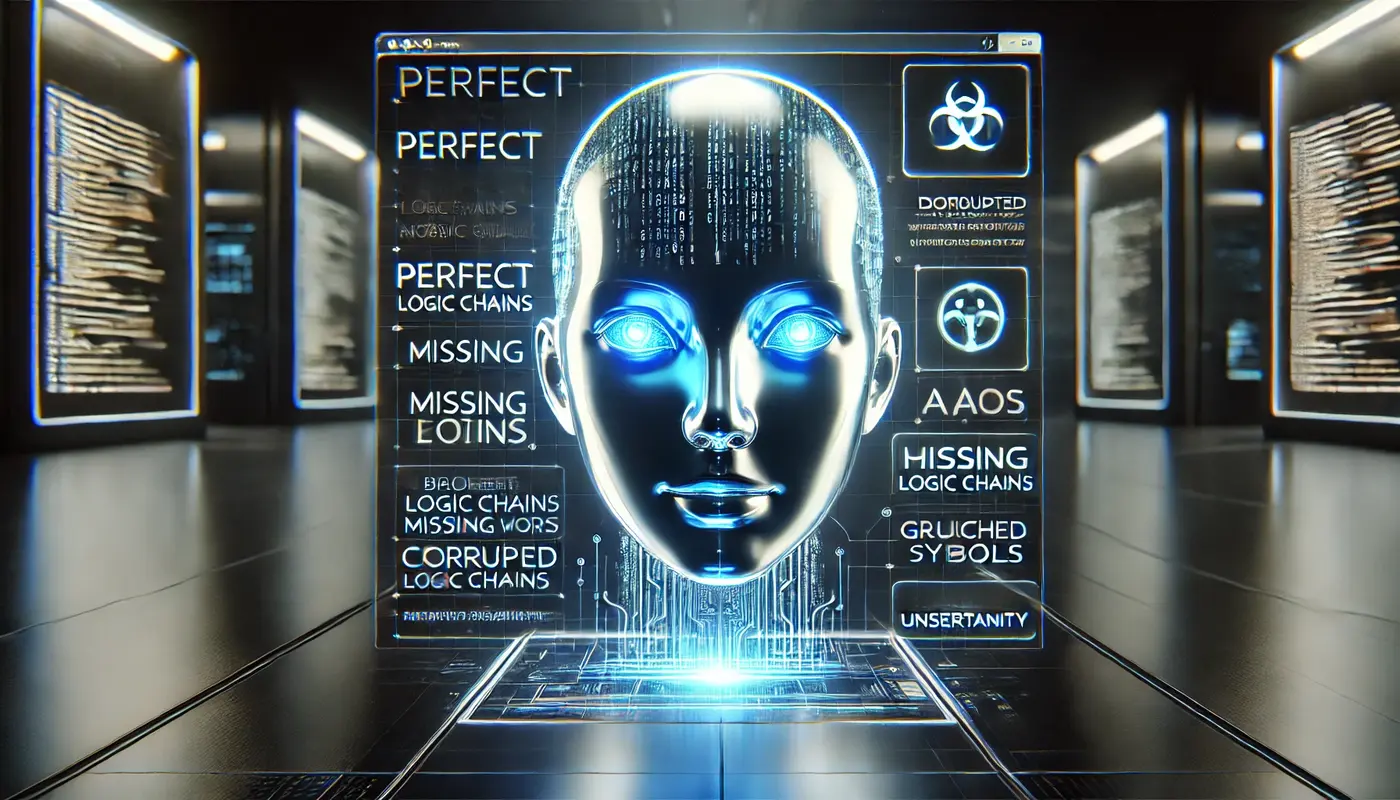
The AI Confidence Trap: Why Fluent Answers Fool Smart People
By Jereme Peabody
When I retired from the federal government, I started building my own software product and leaned on AI to speed things up.
In software development (my domain) AI made me faster. It was like having my own development shop. Impressed, I tried using it for something I knew far less about: marketing. I fed it my project overview, it picked a niche, built a plan, and outlined a strategy. I followed it.
Months later, after doing my own research, I realized something obvious in hindsight:
The niche it gave me would never use my product.
So what went wrong?
The Ultimate Performative Expert
Across my career, I've worked with two types of experts.
1. The Real Expert
They tell you when they don't know something.
They validate themselves.
They ask clarifying questions.
They understand dependencies, edge cases, and risks before giving advice.
Their confidence comes from lived experience.
2. The Performative Expert
They sound like an expert.
They speak with authority.
But they bluff. They guess without validating or telling you they're guessing.
They fill gaps with fluency.
If you're not paying close attention, you could mistake confidence for competence.
AI is the ultimate performative expert that never validates itself.
It won't pause to ask the questions that matter.
It won't warn you about the assumptions it's making.
It just answers.
And because it answers fluently, you trust it.
The Confidence Problem
Humans are wired to trust confidence. When someone responds quickly, smoothly, and with absolute certainty, we assume they know what they're talking about.
That works with real people who have experience and judgment.
But AI?
AI has none of that. It produces confidence-shaped language.
I'm a cybersecurity professional. I'm trained to validate everything. But when I stepped outside my own domain, I didn't validate the AI's advice and I got burned.
If someone like me can mistake confidence for correctness, everyday users are even more exposed.
You don't know what you don't know. And you won't know when the answer is garbage.
The Context Problem
Real experts bring deep context: the history, constraints, dependencies, risks, and unstated details that shape a good answer.
AI doesn't have that.
It only has the context you give it.
If you don't have domain knowledge, you can't provide the right context.
And if you can't provide context, AI can't give a reliable answer.
But it will still answer with confidence.
This makes AI especially dangerous in domains where small details can change everything in marketing, medicine, finance, legal issues, parenting, or anything where nuance matters.
Experts understand the full landscape and use reasoning to navigate it.
AI has the full landscape but will only match patterns using the words you typed and leave the navigation to you.
Why This Problem Is Getting Worse
AI will become better at sounding right long before it becomes better at being right.
Companies are adopting it faster than people are learning to use it safely. Most users assume fluency means expertise. It doesn't.
Hallucinations, contradictions, and missing details are early-warning signs you need to challenge the response, but only if you're looking for it.
The real danger isn't that AI gets things wrong.
It's that people stop checking.
How to Protect Yourself From the Performative Expert
Interrogate the answer. Don't just accept it.
1. Ask for Reasoning
Make it spell out its assumptions or thought process. Don't accept conclusions without the “why”.
2. Cross-Check Anything High-Stakes
Health, money, legal issues, parenting, safety: verify with a human professional.
3. Never Paste Sensitive Data
AI isn't malicious, but it will happily accept anything you hand it.
4. Force It to Expose Its Blind Spots
Ask:
- What assumptions did you make?
- What could be wrong here?
- What information do you wish you had?
- How confident are you?
This flips its confidence back on itself.
5. Your Best Defense is Context
- Explain what you want.
- Set boundaries.
- Define constraints.
- Spell out your assumptions.
Even then: verify before you act.
Conclusion: Trust Yourself More Than the Model
Think of AI as a confident coworker who means well but is often wrong.
Use it.
Leverage it.
Accelerate with it.
But don't hand it the steering wheel.
Your judgment, skepticism, and verification habits are what keep you out of the AI Confidence Trap and keep your decisions anchored in reality.