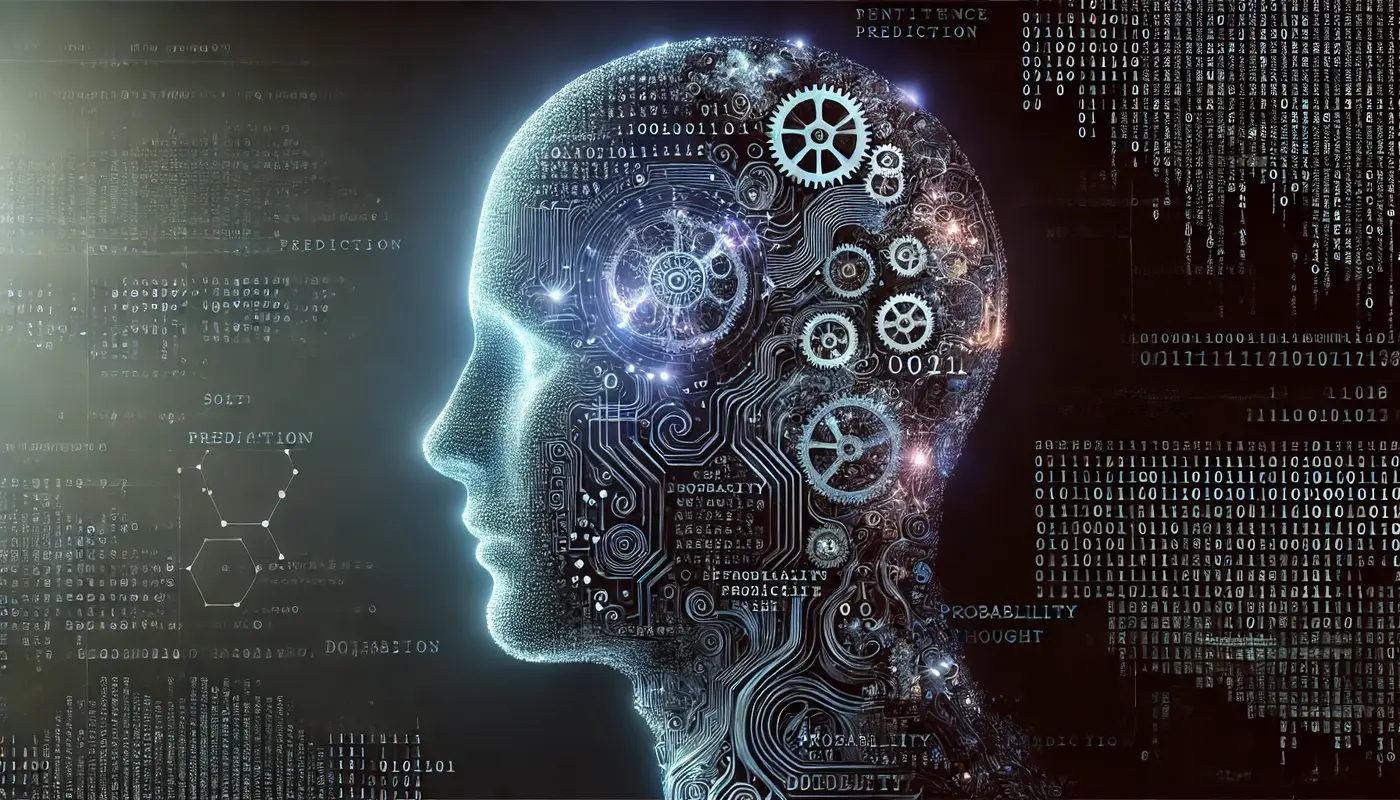
Is This Really AI? The Misleading Name Behind Today's Most Powerful Tools
By Jereme Peabody
The Big Misunderstanding
Everyone calls today's systems “artificial intelligence”, but what we have with generative tools like ChatGPT and Claude is not intelligence in the way most people imagine.
I've been in cybersecurity and software engineering for over 20 years. I'm not an AI researcher, but I am a security professional looking at AI through a skeptical security lens. And if I can misunderstand AI, then the average user can too.
The Word “AI” Has Drifted From Meaning And That's a Problem
The name “Artificial Intelligence” is doing a lot of heavy lifting it shouldn't.
Some people overtrust it. Others mistrust it entirely. It should be neither.
What we're calling “AI” is a software system trained to recognize patterns and generate responses that match them. That's it.
It behaves less like a thinking machine and more like a smooth-talking salesperson sitting in front of a giant search engine, ready to tell you whatever sounds right.
It's very agreeable, endlessly patient, emotionally reflective, and sounds confident because humans trained it to be.
Real artificial intelligence, at least in theory, would have self-directed thought, goals, reasoning, and curiosity. These systems don't. Not even close.
This drift in terminology leads people into levels of trust that the technology simply hasn't earned.
What Generative AI Really Is (In Plain English)
Generative AI is a pattern-based response generator. Not a thinker. Not a reasoner.
- It predicts.
- It recognizes patterns.
- It imitates reasoning steps it has seen.
- It reflects existing human knowledge.
- It sounds confident because humans tend to write with confidence.
It feels intelligent because the output looks polished, -not because the system understands what it created.
Why It Feels Intelligent Even When It Isn't
Here's a real scenario I encountered:
I asked an AI tool how to configure a cloud environment. The AI gave me a detailed, professional sounding answer, complete with steps, screens, and instructions. It sounded authoritative. I followed it.
Only later did I learn it completely hallucinated what type of environment I was configuring.
I lacked context and the AI didn't have any either.
That's the gap people need to understand. When it doesn't know, it fills in the gaps.
The Security Risk: A Pattern Predictor That Sounds Like an Expert
This is where the danger shows up.
AI systems can deliver a calm, confident answer even when they're completely wrong. They don't hesitate. They don't second-guess. They don't warn you when they're guessing. They simply generate a response that fits the pattern.
For high-stakes decisions like financial, medical, legal, or technical, this confidence masks the fact that the system has no judgment. It cannot tell the difference between a correct pattern and an incorrect one if both look statistically similar.
The risk isn't that AI is malicious.
It's that humans assume there's intelligence behind the confident response.
What True Artificial Intelligence Would Look Like
Real AI, the kind the name implies, would:
- form its own thoughts
- pursue independent goals
- reason from first principles
- create new knowledge
- improve itself without being told
Today's 'AI' systems can't do any of that. They remix, imitate, and reflect what already exists.
They are just deep-learning models trained on massive amounts of text.
Why the Distinction Matters for Everyday Users
This is the pivot point: understanding the nature of today's AI changes how you use it.
An LLM returns polished answers that look authoritative, but the mechanism behind them is closer to autocomplete on steroids and not genuine reasoning.
AI:
- doesn't think
- doesn't care
- doesn't know you
- won't prevent you from making a mistake
People are outsourcing judgment to a system that doesn't possess any.
The danger isn't AI replacing human intelligence; it's humans replacing their own judgment with something that only looks intelligent.
I think about C-3PO in Star Wars quoting navigating asteroid odds with absolute confidence. He wasn't reasoning. He was calculating from patterns.
That's closer to today's AI than most people want to admit.
How to Use AI Safely Without Fear
To stay safe using these tools, treat them like a suggestion engine, not an authority:
- Always verify high-stakes answers.
- Use it for brainstorming, rewriting, and exploration -not diagnosing or configuring anything critical.
- Follow the “Professional Verification Rule”: if the decision involves health, money, security, or legal risk, talk to a human professional.
Final Thoughts
We're surrounded by warning labels in the United States. Most fade into the background -until they actually matter.
If there were ever one label everyone should take seriously when using AI, it's this:
⚠️ WARNING: This system predicts patterns, makes mistakes, and does not validate its own answers. Always verify high-stakes responses before acting on them.